



CarExplore Score
Our overall rating for the BYD Shark 6, blending expert verdicts with safety, running costs and more.
Scores updated July 2026. Cost of Ownership uses the ADR combined fuel figure of 2.0L/100km, which relies on regular charging. Uncharged, the Shark uses about 7.9L/100km.
How we calculate our review scoresThe 2026 BYD Shark 6 is the plug-in hybrid ute that dragged a diesel-only segment into the electric age, and it is still the cheapest way into one. Its strongest card is running costs if you charge it, along with a cabin, kit and on-road polish that embarrass utes costing more. Its biggest catch is capability: in Premium form it tows 2,500kg where most rivals do 3,500kg, its payload is among the lowest in the class, and reviewers agree it is a lifestyle ute first and a workhorse second. It suits families and weekend adventurers with a home charger. It suits heavy towers and hardcore off-roaders far less.
2026 BYD Shark 6 key specifications
- Engine: 1.5L turbo-petrol plus dual electric motors (Dynamic, Premium); 2.0L turbo-petrol plus dual electric motors (Performance)
- Power and torque: 321kW / 650Nm (Dynamic, Premium); 350kW / 700Nm (Performance)
- Battery: 29.6kWh BYD Blade LFP
- Transmission: single-speed, plug-in hybrid
- Drivetrain: AWD (electric front and rear axles)
- Price: $55,900 to $62,900 before on-road costs
- Fuel economy: 2.0L/100km combined (NEDC, battery charged), 7.9L/100km once depleted; 95 RON premium unleaded
- EV range: 100km NEDC (Dynamic, Premium); 80km WLTP (Performance)
- Body styles: dual-cab pickup; cab-chassis (Dynamic)
- ANCAP: 5 stars, tested 2025 under the 2025 protocols, expires December 2031, applies to all variants
- Warranty: 6 years / 150,000km vehicle; 8 years / 160,000km high-voltage battery
- Towing (braked): 2,500kg (Dynamic, Premium); 3,500kg (Performance)
- Payload: 900kg (Dynamic); 790kg (Premium); 725kg (Performance)
How much does the BYD Shark 6 cost?
The range runs from $55,900 to $62,900 before on-road costs. The Dynamic is a cab-chassis aimed at trades and fleets, and drops to a 12.8-inch screen. The Premium is the full pickup most buyers choose, with a 15.6-inch screen, a head-up display and heated and ventilated front seats. The Performance looks identical to the Premium outside but swaps the 1.5-litre engine for a 2.0-litre, adds power, and lifts braked towing to 3,500kg for a $5,000 jump.
Before on-road costs. Correct as at July 2026.
Drive-away, the Premium has been advertised around $61,000, though dealer stock listings vary, so confirm the on-road figure for your state. The standard paint is Great White. Mist Grey, Deep Sea Blue, Tidal Black and Outback Orange each add $700.
What the experts said
We read the major Australian reviews of the Shark 6 Premium, and the honest starting point is how they score it. The outlets no longer all use a number. CarSauce, Chasing Cars and CarsGuide each published a directly comparable out-of-10 score. CarExpert has moved to word ratings and graded the Shark "Very Good", which we map onto the same 10-point scale rather than leave out. Two reviews sit outside the rating: Carsales scored the Performance flagship rather than the Premium, and WhichCar by Wheels published a verdict with no overall figure. Our Media Expert Rating blends the four that speak to the Premium, weighting the three published scores above the mapped grade.
Blended and weighted, they land at 8.3 out of 10. CarSauce is highest at 9.0 (its 4.5-out-of-5 score normalised to a 10-point scale). CarsGuide is lowest at 7.4 in its most recent Premium review, having scored it higher, at 8.3, at the original 2025 launch before the field caught up. Chasing Cars sits at 8.5, and CarExpert's "Very Good" maps to 8.2.
Where reviewers agree: the value, the cabin quality, and the quiet, effortless drivetrain around town. Where they split: how much the petrol engine's manners bother you, and how much the towing and off-road limits matter. Chasing Cars found it difficult to consider anything less than a segment game-changer at the price. CarsGuide's more recent take was cooler, with reviewer Emily Agar writing that the "underpowered engine, mixed handling, and quirky safety tech hold it back". NRMA's tester recorded real-world consumption spiking to 18.4L/100km on a sustained tow, and found it struggled on articulated off-road terrain. Those are the outlets' findings, not ours.
CarSauce on the 2025 Shark 6 Premium 9.0/10
Scored it 4.5 out of 5 overall (normalised here to 9.0 out of 10), praising strong performance, advanced off-road driving modes and a spacious, tech-filled interior, while marking it down for limited towing, road-biased tyres and a payload below its competitors. Published October 2024.
Chasing Cars on the 2025 Shark 6 Premium 8.5/10
Rated it outstanding value with an effortless, refined drivetrain and a spacious cabin, while marking it down for below-average braked towing and payload, a lumpy ride on rough surfaces and a wide turning circle. Published February 2025.
CarsGuide on the 2026 Shark 6 Premium 7.4/10
Praised the value, space and tech, but found the petrol engine loud and short on grunt on hills, the handling mixed, and some driver-assist systems poorly calibrated. Published November 2025.
CarExpert on the 2025 Shark 6 Premium Very Good, CarExplore 8.2
Rated it "Very Good" under CarExpert's word system, which we map to 8.2 on our scale, a graded verdict that carries a little less weight than a published number. It called the Shark Australia's most popular PHEV ute and praised the smooth, comfortable on-road feel, while noting rough edges still hold it back. Published November 2025.
Carsales on the 2026 Shark 6 Performance 79/100 scale
Reviewed the new Performance flagship, not the Premium, and uses a 100-point scale we do not fold into a 10-point average. It welcomed the added power, off-road Crawl mode and 3,500kg towing, while noting the flagship is not the sporty ute its name suggests. Published May 2026.
Note on variants: the three numeric scores above are all for the Premium. CarsGuide also gave the new Performance an 8.5 and the Dynamic cab-chassis an 8.0 in separate first-drive tests, but a flagship score is not a Premium score, so we have kept them out of the Premium picture.
Which BYD Shark 6 should you buy?
The value pick is the Premium. For most buyers it is the sweet spot: the full 15.6-inch screen, head-up display, heated and ventilated seats, and the same 321kW drivetrain as the cab-chassis, at $57,900 before on-roads.
The one to skip for most is the Performance. The $5,000 step buys 1,000kg more braked towing (3,500kg) and a Crawl off-road mode, which matters if you tow a big caravan. If you do not, note the trade-offs: reviewers say it does not feel meaningfully quicker in normal driving, and its payload actually drops to 725kg, the lowest in the range. BYD itself expects only about a quarter of buyers to choose it.
Worth a look for trades is the Dynamic cab-chassis. It is the cheapest at $55,900, and its lighter kerb weight gives it the best payload of the three at 900kg, though it keeps the 2,500kg towing limit and a smaller screen.
How the BYD Shark 6 compares to its rivals
| Model | Price from (plus ORC) | Power/torque | EV range | Towing (braked) | ANCAP |
|---|---|---|---|---|---|
| BYD Shark 6 Premium | $57,900 | 321kW / 650Nm | 100km (NEDC) | 2,500kg | 5 stars |
| GWM Cannon Alpha PHEV (Lux) | $59,990 | 300kW / 750Nm | 110km | 3,500kg | 5 stars |
| Ford Ranger PHEV (XLT) | $71,990 | 207kW / 697Nm | 45km (WLTP) | 3,500kg | 5 stars |
All three hold five-star ANCAP ratings, but under different datestamps (Shark 6 in 2025, Ranger in 2022), so their sub-scores are not comparable across the two eras. Ford has also discounted the Ranger PHEV since launch, so check its current drive-away pricing. Against its two plug-in rivals the Shark's pitch is price and cabin polish. The Cannon Alpha PHEV lines up closest on money and beats it on towing. The Ranger PHEV asks a lot more to start. Where the Shark genuinely wins is value and on-road refinement. Where it genuinely loses, in Premium form, is braked towing and payload.
Gallery
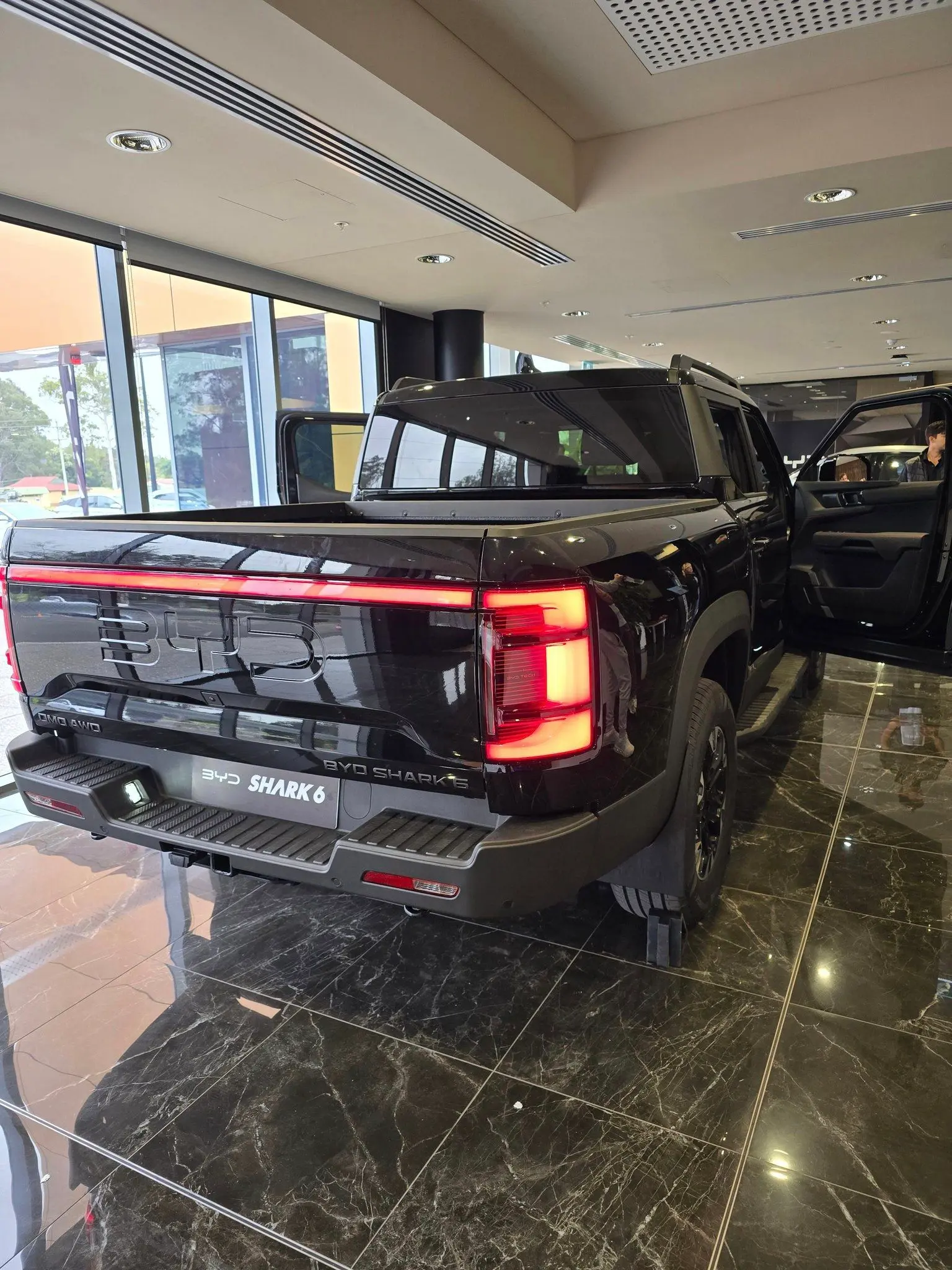
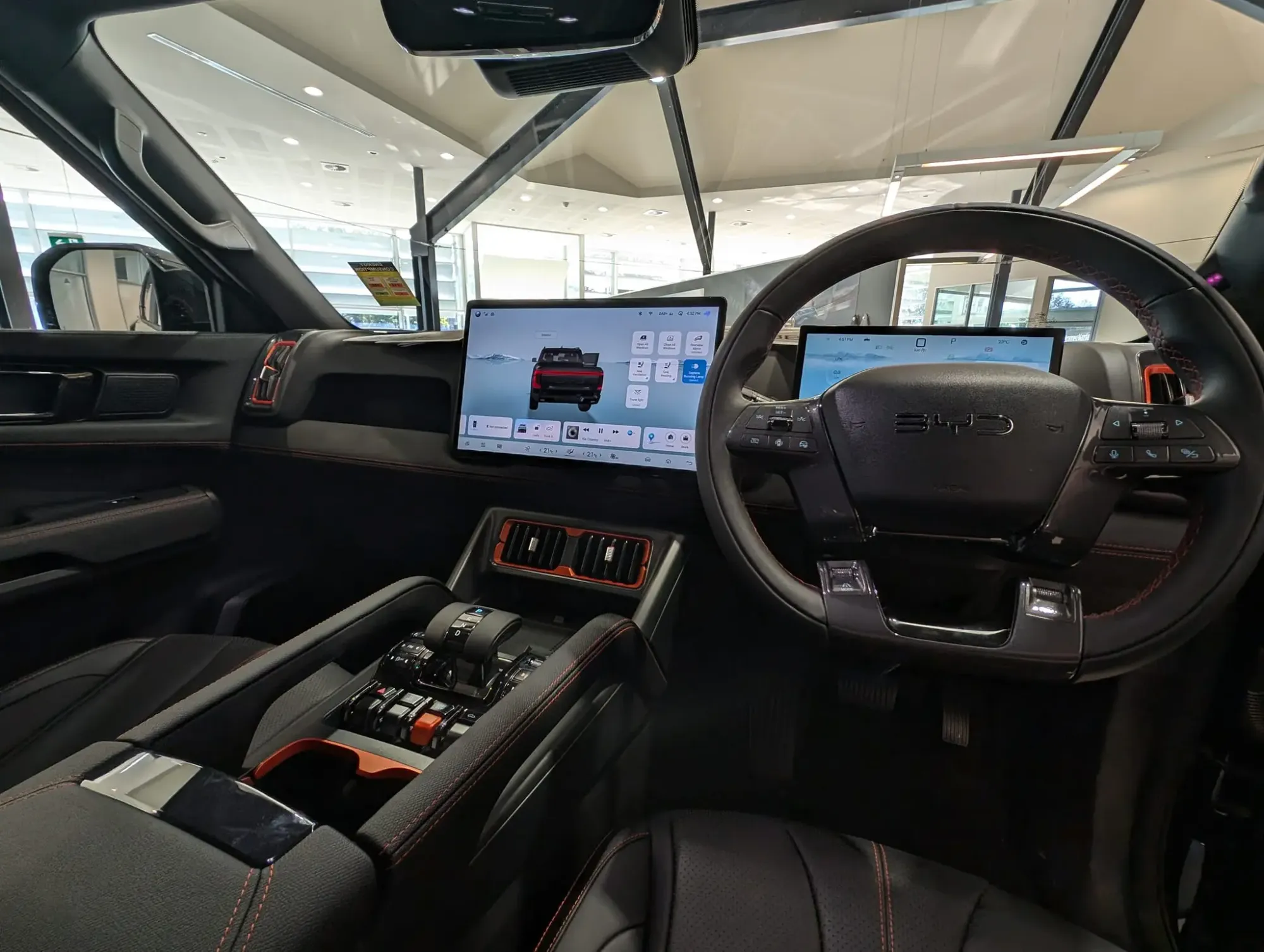
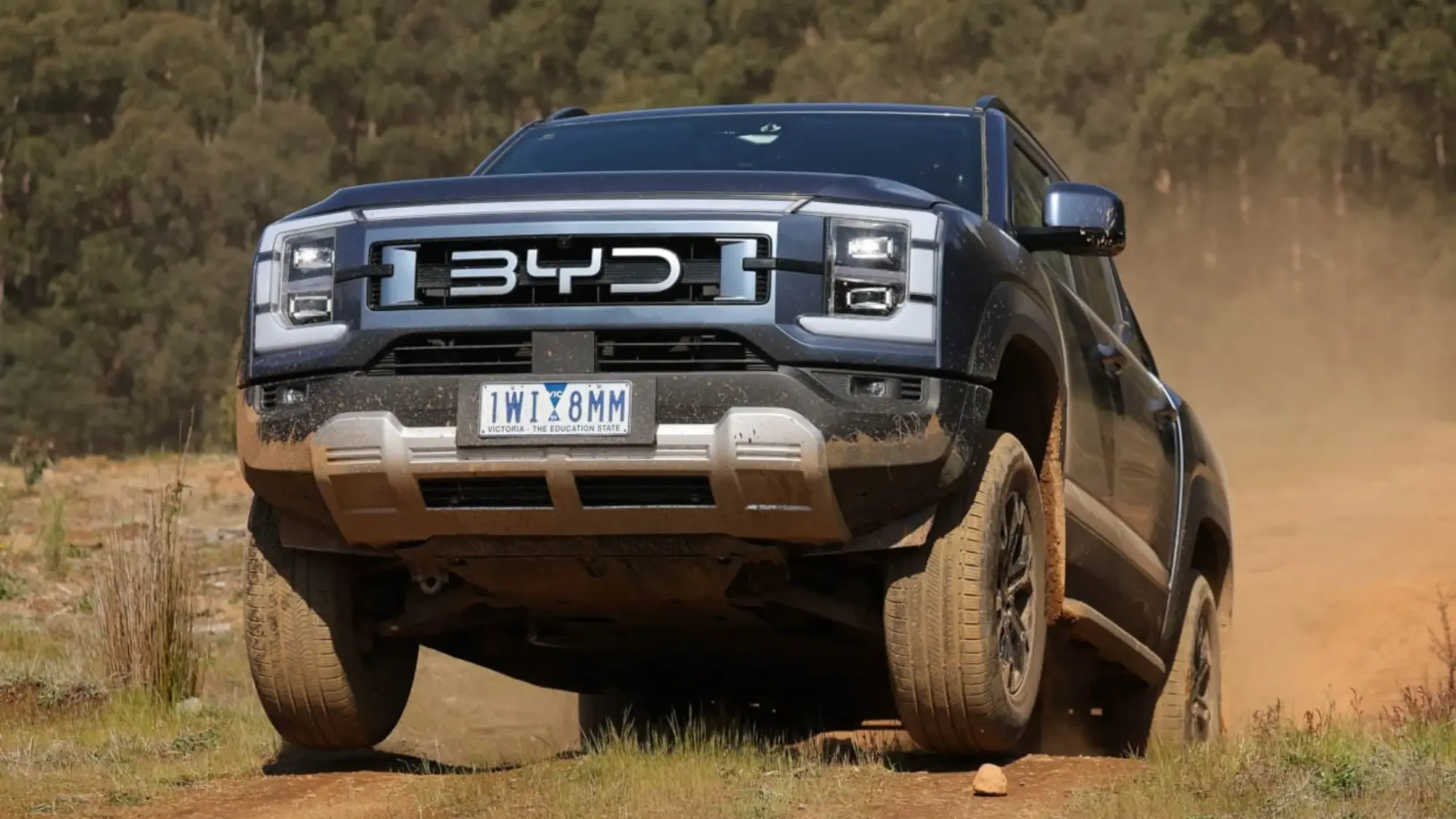
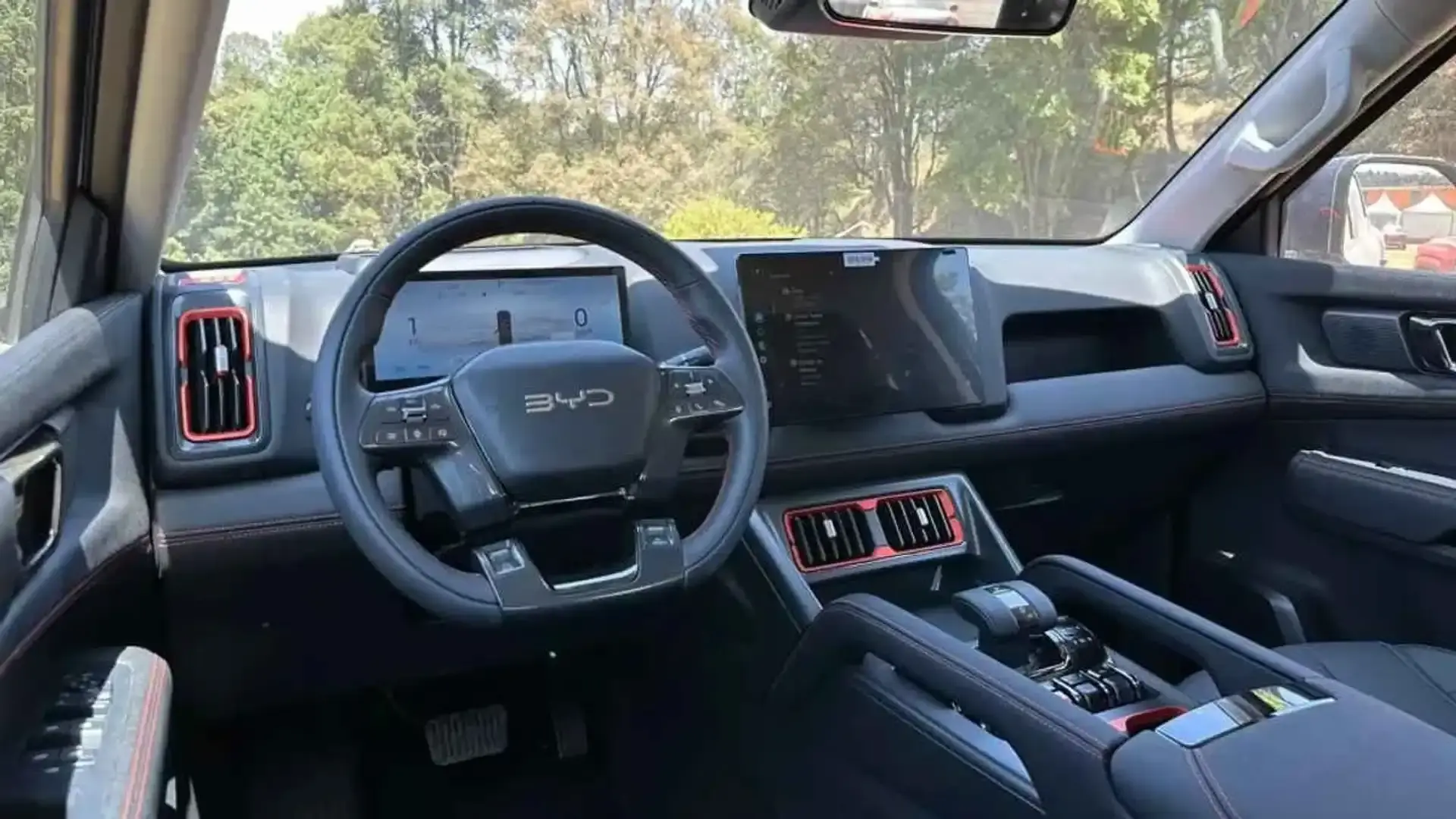
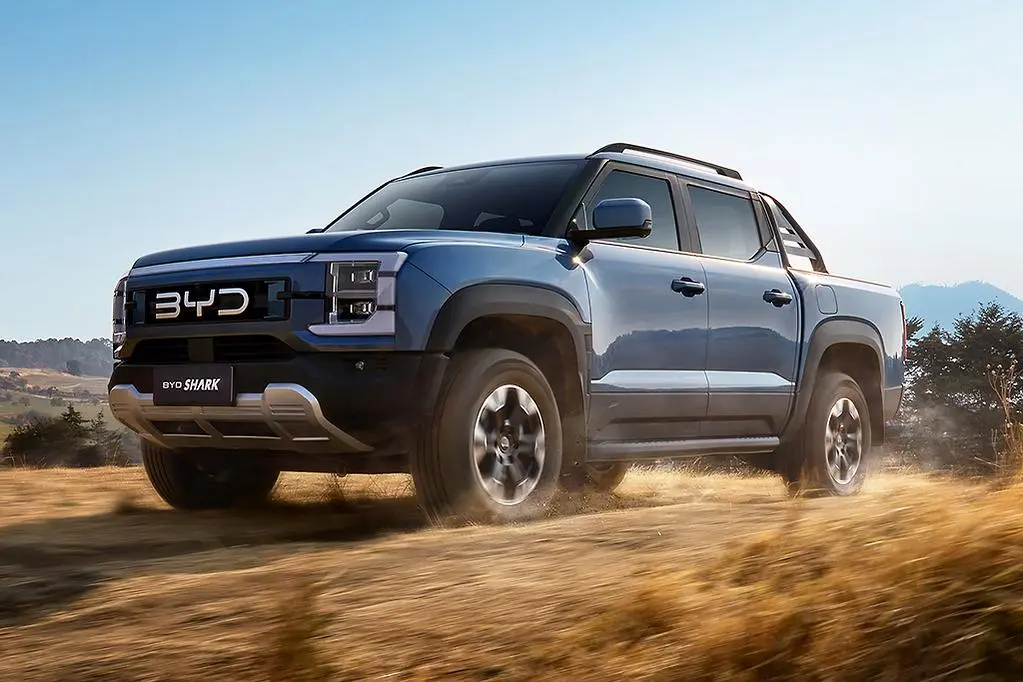
Engine, towing and payload
There are two drivetrains. Dynamic and Premium use a 1.5-litre turbo-petrol engine (135kW/260Nm) working with two electric motors for a combined 321kW and 650Nm, fed by a 29.6kWh Blade battery. The Performance swaps in a 2.0-litre turbo-petrol engine for a combined 350kW and 700Nm. BYD claims 0 to 100km/h in 5.7 seconds for the Premium and 5.5 for the Performance. Chasing Cars recorded 5.6 seconds in the Premium on its own testing, quicker than a petrol Ranger Raptor.
Capability is the catch, and it changes by grade. Dynamic and Premium tow 2,500kg braked, a full tonne under the class norm. The Performance lifts that to the segment-standard 3,500kg. Payload runs the other way: the cab-chassis Dynamic carries the most at 900kg, the Premium 790kg, and the Performance the least at 725kg. If maximum payload matters more than towing, the flagship is the wrong pick. There is no low-range transfer case or mechanical locking differential on any grade. A software Crawl mode debuted on the Performance, and BYD says it will reach the other grades by over-the-air update.
Fuel economy and running costs
This is the Shark's headline trick, with an asterisk. BYD's claimed combined figure for the Premium is 2.0L/100km on the NEDC test, achieved only with charge in the battery. Once the battery drops below about 25 per cent, the claim becomes 7.9L/100km as the petrol engine takes over. Real-world reports back that split: Chasing Cars saw about 6.8L/100km over a mixed loop with a recharge, and around 8L/100km on longer runs without charging. NRMA recorded 18.4L/100km towing hard. The lesson is consistent across outlets: charge it and it is remarkably cheap to run, do not and it is a thirsty-ish petrol ute. The Shark takes 95 RON premium unleaded and holds a 60-litre tank.
Here is the five-year sum. At the ADR combined figure of 2.0L/100km and the NRMA Sydney Premium 95 average of 191.5 cents a litre (mid-July 2026), that is about $575 a year in petrol, or roughly $2,875 over five years. Add BYD's five-year capped-price servicing total of $2,489, and the five-year running cost lands near $5,360, which is why the Cost of Ownership score maxes out. Remember that the 2.0L/100km basis assumes you plug in regularly. BYD quotes an EV-only range of 100km on the NEDC standard for the Dynamic and Premium. The new Performance quotes 80km on the stricter WLTP standard, so the two are closer in practice than they look. All three charge at up to 7kW on AC and 55kW on DC. Servicing falls due every 12 months or 20,000km, among the longest intervals in the class.
Interior and technology
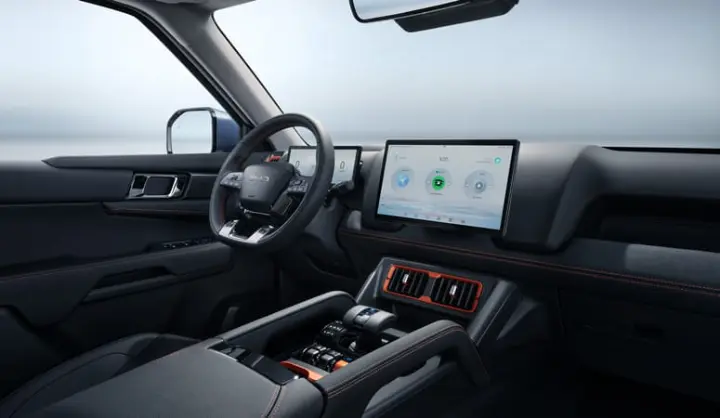
Reviewers rate the cabin well above ute norms. The Premium gets a 15.6-inch rotating touchscreen, a 10.25-inch driver display, a head-up display, wireless Apple CarPlay and Android Auto, a 12-speaker Dynaudio system, powered heated and ventilated front seats and synthetic leather. There are four 230-volt outlets, three in the tray, handy for tools or camping. The Dynamic cab-chassis drops to a 12.8-inch screen and loses some Premium kit. Rear-seat space draws consistent praise. The recurring gripe across reviews is buried menus and, on some cars, over-eager driver-assistance alerts.
How safe is the BYD Shark 6?
The Shark 6 holds a five-star ANCAP rating from testing in 2025, under the 2025 protocols, and it was the first PHEV ute ANCAP rated five stars. The four category scores were Adult Occupant Protection 85 per cent, Child Occupant Protection 87 per cent, Vulnerable Road User Protection 74 per cent and Safety Assist 86 per cent, which is how we reach the Safety score of 8.3. The rating applies to all variants and expires in December 2031. ANCAP did flag one concern: because of the ute's size, weight and front-end design, it says the Shark "poses a higher risk to occupants of oncoming vehicles", and penalised it accordingly. Standard kit includes seven airbags, a centre airbag, autonomous emergency braking, blind-spot monitoring and child presence detection.
Reliability, warranty and known issues
BYD covers the Shark 6 with a six-year, 150,000km vehicle warranty and an eight-year, 160,000km warranty on the high-voltage battery, generous on the battery even if the vehicle cover is kilometre-capped rather than unlimited. That underpins the Reliability score of 7.5: a baseline for a strong mainstream warranty, credit for the longer battery cover, and no deduction because there is no open recall against this generation on the government register as at July 2026. Owner reports of driver-assistance niggles and occasional no-start software faults are not recalls, and are not counted here. Buyers also get 12 months of complimentary roadside assistance.
Pros and cons
Pros
- Cheapest way into a plug-in hybrid ute, and generously equipped for the money
- Very low running costs if you charge it, with a claimed 2.0L/100km (NEDC) battery-charged figure
- Quiet, quick, refined drivetrain around town, quicker to 100km/h than a petrol Ranger Raptor on Chasing Cars' testing
- Cabin quality, tech and rear-seat space that shame pricier utes
- Five-star ANCAP (2025) with seven airbags and child presence detection
Cons
- Premium and Dynamic tow only 2,500kg braked, a tonne under the class norm (the Performance fixes this)
- Payload is low across the range, and lowest of all on the Performance at 725kg
- No low-range gearing or locking diffs, and reviewers report it struggles on rough, articulated off-road terrain
- Petrol engine gets loud and feels short on grunt on hills once the battery is low, per CarsGuide
- Real-world fuel use climbs steeply without charging, up to 18.4L/100km towing hard on NRMA's figures
FAQ
Is the BYD Shark 6 a good ute?
For families and weekend adventurers with home charging, reviewers rate it highly for value, comfort and running costs. Heavy towers and serious off-roaders should weigh its limits first.
How far can the BYD Shark 6 go on electric only?
BYD claims 100km on the NEDC test for the Dynamic and Premium, and 80km on the stricter WLTP test for the Performance. Independent testing has seen closer to 80km in the Premium.
How much can the BYD Shark 6 tow?
The Dynamic and Premium tow 2,500kg braked. The Performance tows 3,500kg braked. All three are rated to 750kg unbraked.
Does the BYD Shark 6 have a good safety rating?
Yes, five stars from ANCAP tested in 2025, valid to December 2031, across all variants.
What fuel does the BYD Shark 6 use?
It takes 95 RON premium unleaded, alongside its plug-in battery, and has a 60-litre tank.
What warranty does the BYD Shark 6 come with?
Six years or 150,000km on the vehicle, and eight years or 160,000km on the battery.
Let's Wrap This Up
The Shark 6 earned its sales the honest way: it undercut everything else with a plug, wrapped it in a cabin nicer than the price suggests, and let buyers do their own fuel sums. Cross-shop it against the GWM Cannon Alpha PHEV on price and the Ford Ranger PHEV on badge and capability. It suits a home-charging family or tradie who tows light and values refinement. If you regularly tow near 3,500kg or crawl serious tracks, step up to the Performance or look at a diesel benchmark.
CarExplore's Comments
If you can charge at home and your towing sits at or below 2,500kg, the Premium is the one to buy, and it will cost you very little to run. If your caravan is heavier, do not talk yourself into the Premium to save money. Pay the extra for the Performance and its 3,500kg rating, and go in knowing its payload drops to 725kg. As at July 2026, that is the clean way to read this range.


Discussion