



Last updated July 2026. Prices and specifications correct at time of writing.
CarExplore Score
Our overall rating for the 2026 Toyota RAV4, blending expert verdicts with running costs, emissions and more.
Scores updated July 2026. There is no Safety sub-score on this page because ANCAP has not rated the sixth-generation RAV4.
How we calculate our review scoresThe 2026 Toyota RAV4 is the most complete version of Australia's favourite SUV yet, with a properly modern cabin and a hybrid system that still sips fuel harder than almost anything in the segment. The catch is a big one: it carries no ANCAP safety rating, and it will not get one until Toyota's running changes land later this year. If five stars on the windscreen matters to you or your fleet, wait. If it does not, this is still the safe family bet it has always been.
2026 Toyota RAV4 key specifications
- Engine: 2.5L four-cylinder petrol-electric hybrid, or 2.5L plug-in hybrid
- Power and torque: 143kW combined (hybrid). 200kW 2WD or 227kW AWD (PHEV)
- Transmission: e-CVT automatic
- Drivetrain: Front-wheel drive or on-demand all-wheel drive
- Price: $45,990 to $66,340 plus on-road costs
- Fuel economy: 4.5L/100km 2WD, 4.6L/100km AWD (ADR combined, hybrid). 95 RON required
- Body styles: Five-seat medium SUV
- ANCAP: Unrated. The previous five-star result applies only to RAV4s built before 1 January 2026
- Warranty: 5 years / unlimited km, extendable to 7 years with dealer servicing
- Towing (braked): 800kg 2WD, 1,500kg AWD
- Boot: 705L hybrid (VDA, measured to the roof), 655L PHEV
How much does the Toyota RAV4 cost?
Before on-road costs. Correct as at July 2026.
Two options matter. Premium paint is $675 and it is mandatory on every XSE, so the XSE prices above are not the prices you pay. And the GX is the only grade that can be optioned with a full-size spare, at $300, which is the best $300 in the range if you drive beyond the suburbs.
Prices are up between about $3,000 and $6,000 depending on grade. The GX 2WD alone is $3,730 dearer than the equivalent old model. For the first time, no RAV4 leaves a dealership for under $50,000 drive-away.
What the experts said
We read four Australian reviews of the new RAV4, and all four feed our Media Expert Rating. Chasing Cars, Wheels and CarsGuide each published a score, Chasing Cars and Wheels both at 8.0 and CarsGuide lowest at 7.6. CarExpert has moved to written grades instead of scores and rated it "Very Good", which we map to 8.2 on the same scale. Blended and weighted, the four land at 7.9 out of 10, with the published scores counting for more than the mapped grade.
The overlap is striking, and so is where it breaks. Three of the four flagged the price rises, and the same three flagged the missing ANCAP rating. Wheels was the exception on both, because its test was a three-way value comparison rather than a launch review. A different three, CarExpert, Chasing Cars and Wheels, flagged the 2.5-litre engine getting loud and droning through the e-CVT when you ask it to work. CarsGuide is the outlier there, scoring the drive nine out of ten without raising it at all. All four praised the same two things: the efficiency, and the new Arene infotainment system, which finally drags the RAV4's tech into this decade.
Where they split is on how much the improvements count for. CarsGuide and Chasing Cars came away from the Tasmanian launch impressed by the steering and body control, with CarsGuide scoring driving nine out of ten. Wheels, testing a base GX against the Honda CR-V and Hyundai Tucson on suburban roads, put the RAV4 third of three. Their verdict was blunt about the base car's cabin: "A urethane steering wheel? In a 50 grand SUV?" Chasing Cars landed in the middle, noting that better value exists elsewhere in the segment while still calling the RAV4 very easy to recommend.
Chasing Cars on the 2026 RAV4 hybrid range 8.0/10
Praised the efficiency, the improved brake feel and the step up in connectivity, and picked the AWD on 18-inch wheels as the sweet spot. Criticised the price rises, the stingy GXL equipment list, the engine noise under load and the busier ride on 20s. Published April 2026.
Wheels on the 2026 RAV4 GX FWD 8.0/10
Rated the ride quality and bump absorption second only to the Honda CR-V in a three-way test, and recorded 5.6L/100km. Marked the base car down for its urethane steering wheel and for the engine noise breaking an otherwise insulated drive. Finished third behind the CR-V and Tucson. Published July 2026.
CarsGuide on the 2026 RAV4 hybrid range 7.6/10
Scored practicality, efficiency and driving nine out of ten each, and called the RAV4 genuinely fun to drive despite the power drop. Marked ownership down to six out of ten over the warranty and the dearer servicing, and said of the safety gap: "we can't definitively say this RAV4 is as safe as Toyota claims". Published 22 April 2026.
CarExpert on the 2026 RAV4 hybrid range Very Good
Graded it "Very Good" under CarExpert's word system, which we map to 8.2 on our scale, a graded verdict that carries a little less weight than a published number. Said there is little bad to say about the car, praised the handling and the spread of equipment, and criticised the price rises, the droney e-CVT calibration and the missing ANCAP rating. Recorded 6.7 to 7.9L/100km on a hard launch route. Published 22 April 2026.
Worth noting which car each outlet drove. CarsGuide, Chasing Cars and CarExpert sampled the mid and upper hybrid grades at the national launch. Wheels tested the base GX 2WD against rivals on ordinary roads, which is a harder test and a different car to a Cruiser.
Which Toyota RAV4 should you buy?
The value pick: GXL 2WD, $48,990. For $3,000 over the GX you get 18-inch alloys, privacy glass, rain-sensing wipers, an eight-way powered driver's seat with lumbar, a wireless phone charger and a leather-accented steering wheel instead of the urethane one Wheels took issue with. CarExpert and CarsGuide both nominated the GXL as the pick of the range, and the 18-inch wheels ride better than the 20s on the flagships.
The one to skip: XSE AWD, $58,340. Add the mandatory $675 paint and it costs more than a Cruiser 2WD, which has the panoramic roof, the JBL system, the head-up display and genuine leather. The XSE also deletes the Edge's 20mm wider track and rides on the 20-inch wheels reviewers found busiest.
Worth stretching for: Edge AWD, $55,340. It is the only hybrid grade to gain the wider track, and it brings the 12.9-inch screen, heated seats and a power tailgate that the GXL misses. If you use dirt roads, this is the one.
How the Toyota RAV4 compares to its rivals
| Model | Price from | Power/torque | Fuel (claimed) | Towing (braked) | ANCAP | Expert score |
|---|---|---|---|---|---|---|
| Toyota RAV4 GX FWD | $45,990 +ORC | 143kW (no torque quoted) | 4.5L/100km | 800kg | Unrated | 7.9 (4 reviews) |
| Honda CR-V e:HEV X | $49,900 drive-away | 135kW/315Nm | 5.5L/100km | 750kg | 4 stars (2024) | 8.5 (Wheels) |
| Hyundai Tucson Hybrid Elite N Line | $53,350 +ORC | 172kW/367Nm | 5.3L/100km | 1,900kg | 5 stars (2021, expires Dec 2027) | 8.3 (Wheels) |
All three carry a five-year, unlimited-kilometre warranty, so that column has been left out. It tells you nothing here.
The RAV4 wins on fuel and on boot space, and it is the only one of the three with a spare wheel fitted as standard across the range. It loses on the thing buyers cannot check for themselves, which is an independent crash rating, and on the fuel grade, since it is the only one here that demands 95 RON.
Gallery
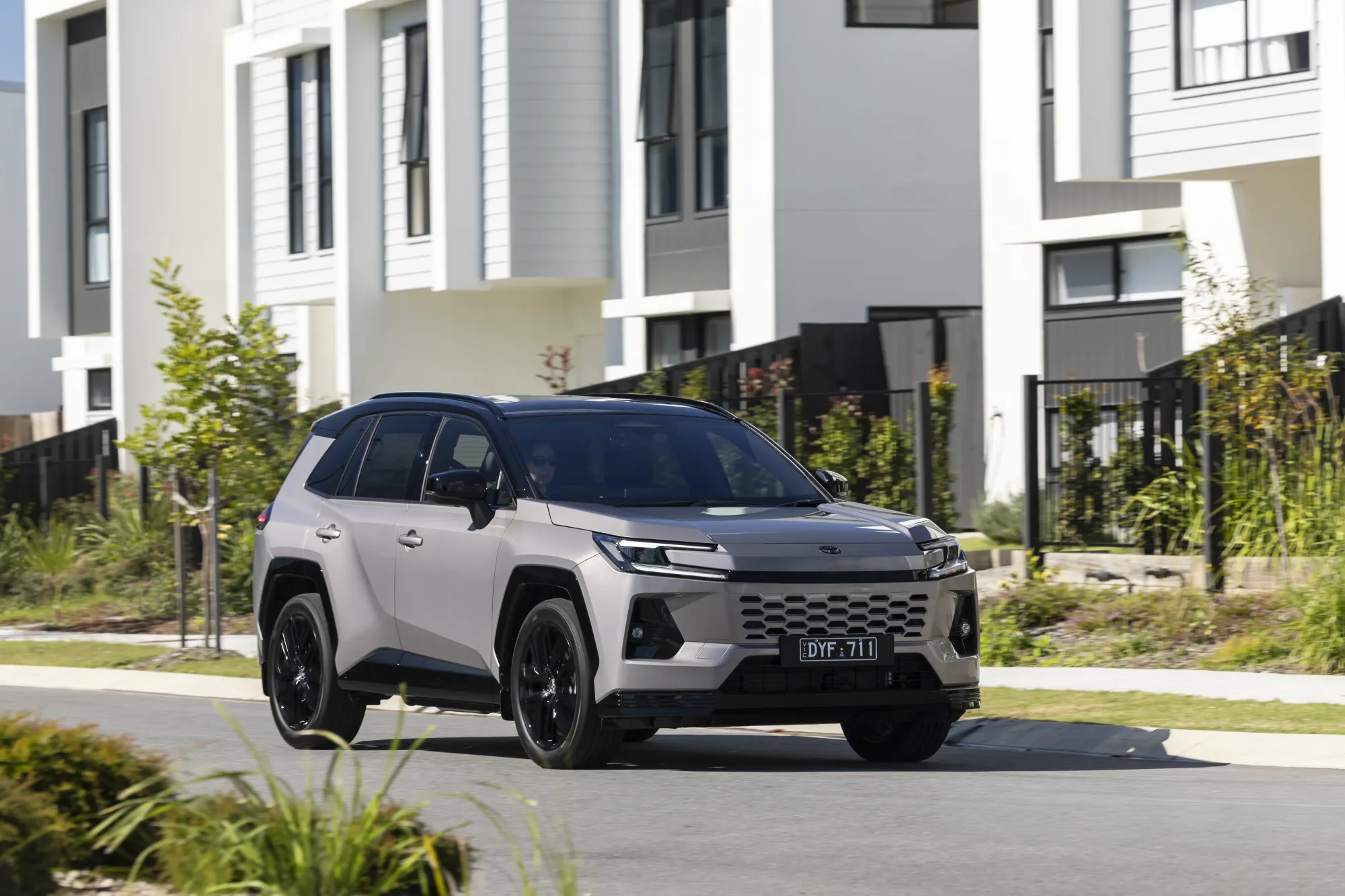
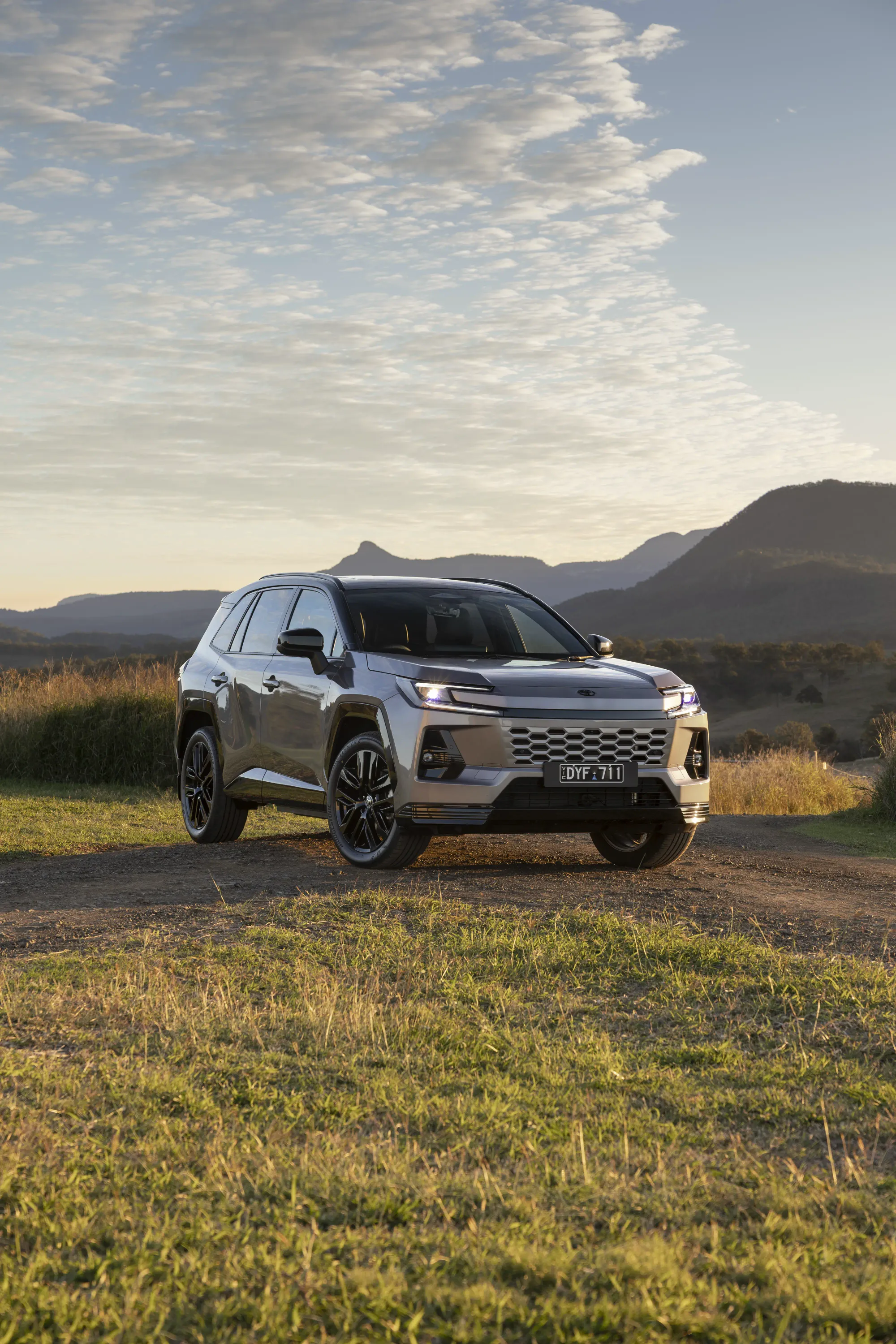
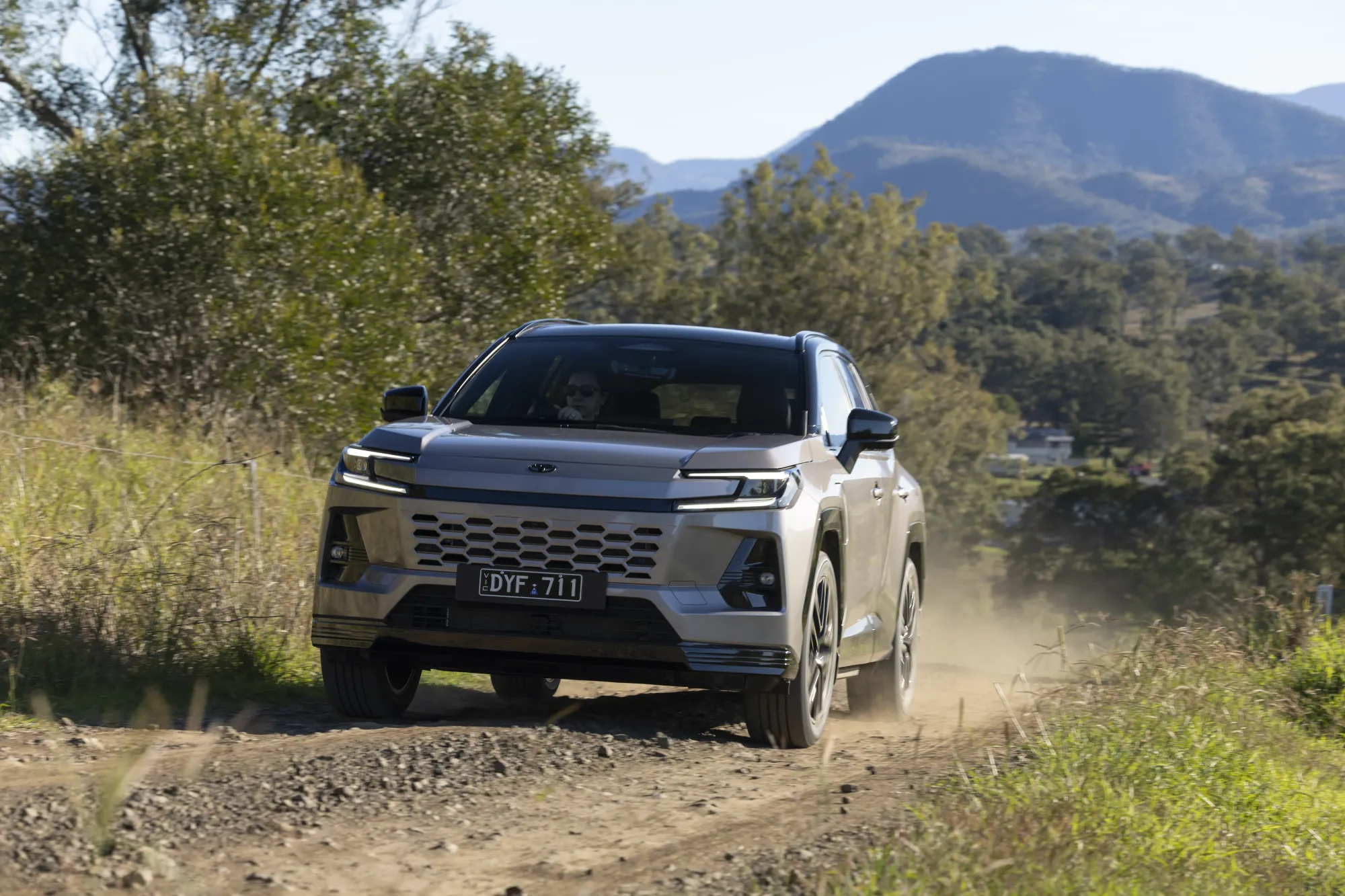
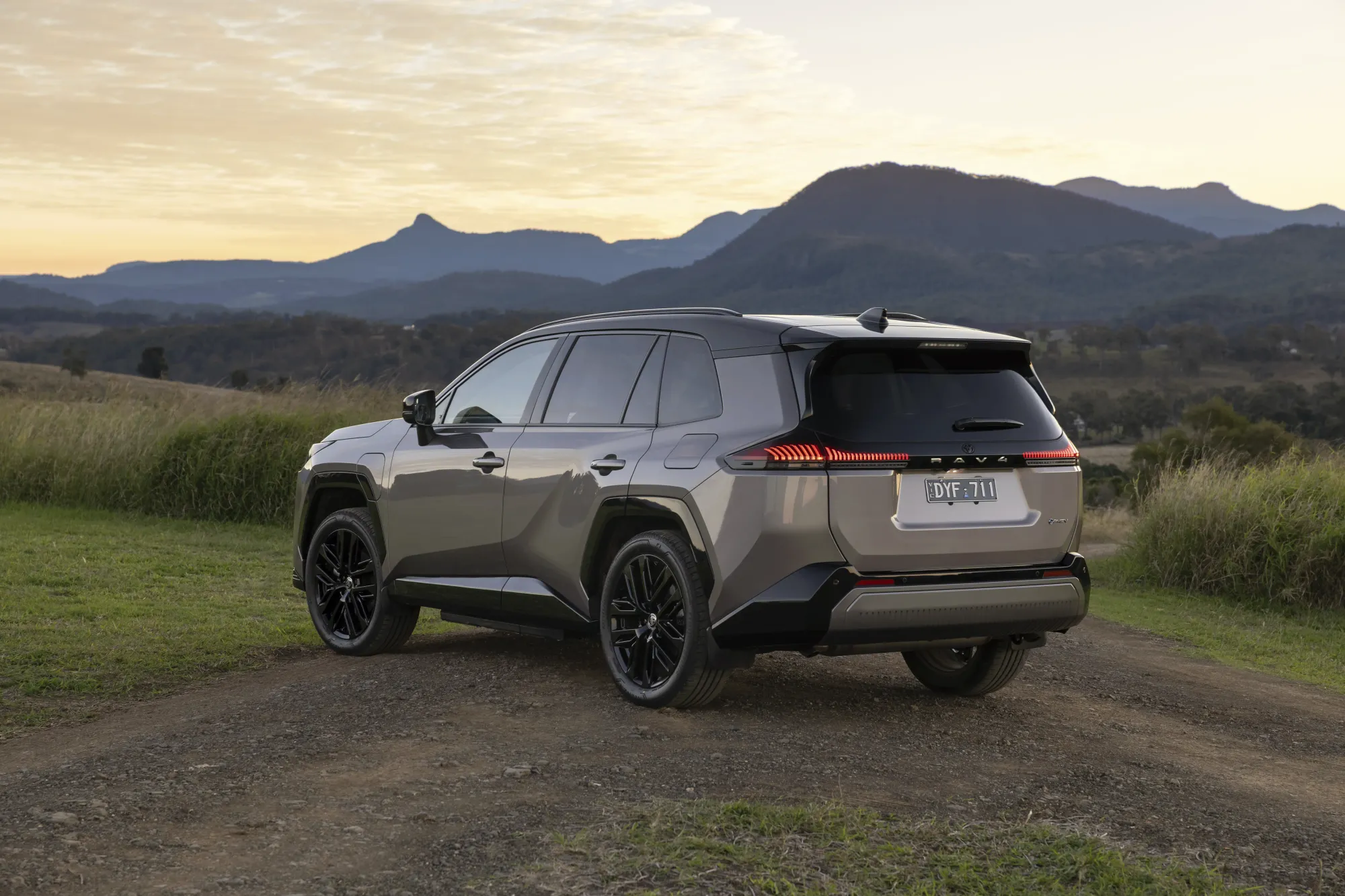
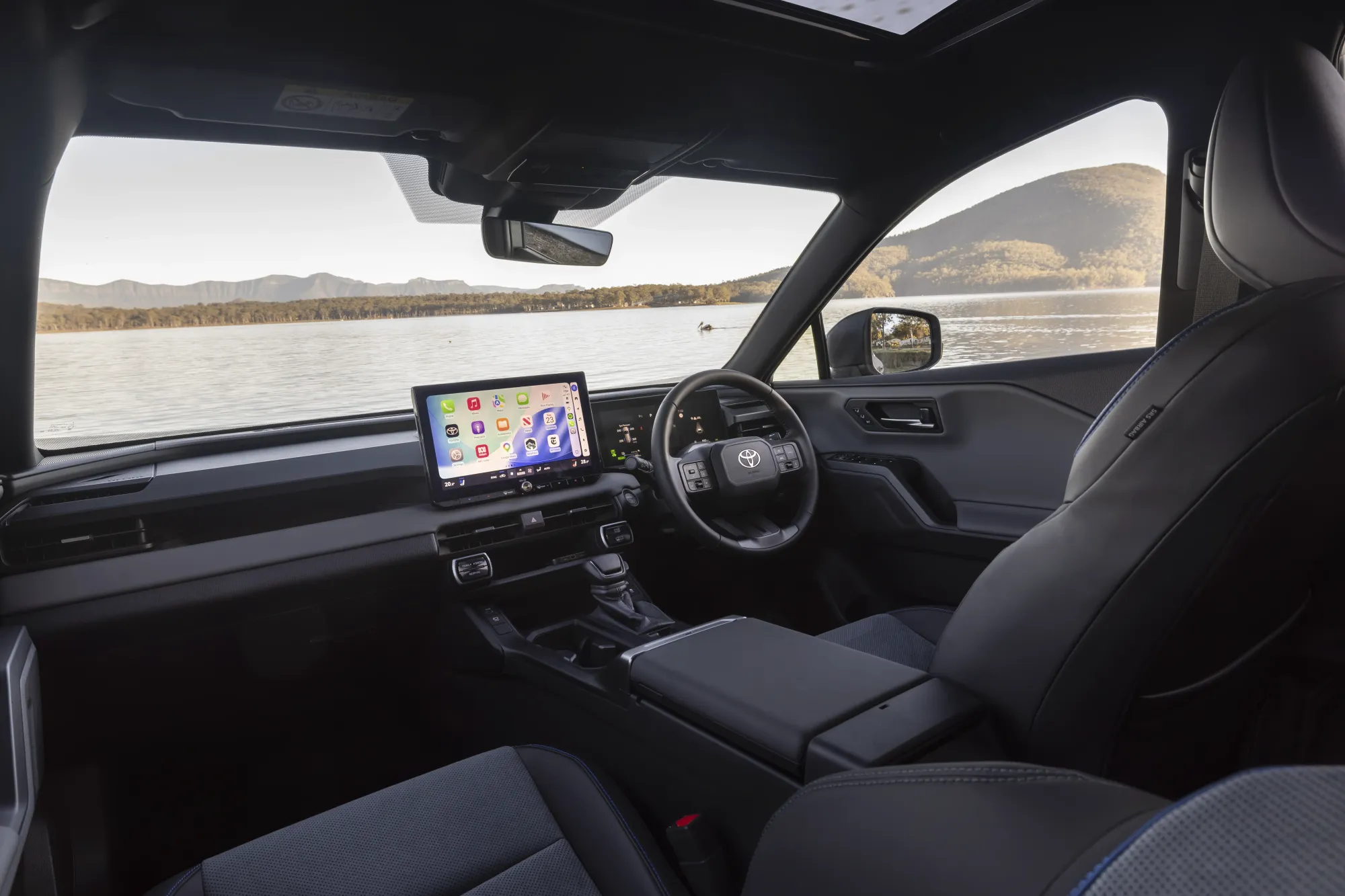
Shown: 2026 Toyota RAV4 PHEV XSE
What is under the bonnet, and what can it tow?
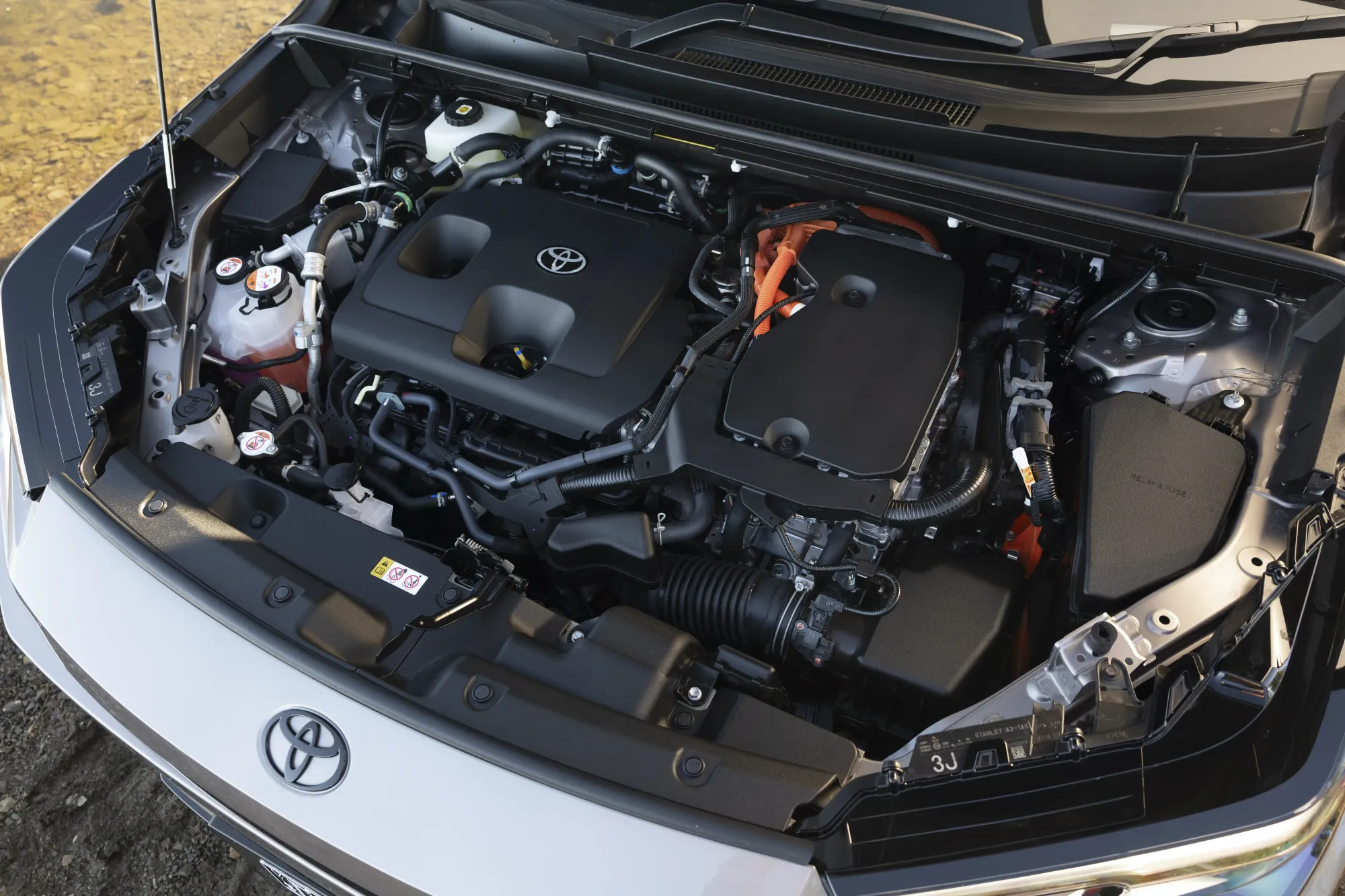
The hybrid pairs a 2.5-litre four-cylinder petrol engine making 105kW and 221Nm with a 100kW front electric motor. All-wheel drive adds a 40kW motor on the rear axle. Combined output is 143kW either way, which is down from 160kW in the old front-driver, a change Toyota attributes to Euro 6 compliance. Toyota claims 8.0 seconds to 100km/h for the 2WD and 7.7 seconds for the AWD.
The plug-in hybrid uses the same engine with a 22.7kWh battery for 200kW in 2WD form and 227kW with all-wheel drive, making the GR Sport the quickest RAV4 Toyota has built at a claimed 5.8 seconds. Electric range is quoted at up to 121km WLTP for the 2WD and 113km for the AWD, with 50kW DC and 11kW three-phase AC charging.
Towing is where the drivetrain choice bites. A front-drive RAV4 is rated at 800kg braked. All-wheel drive lifts that to 1,500kg. If you have a box trailer and a couple of bikes, the 2WD is fine. If you have a camper, it is not.
Fuel economy and running costs
Toyota claims 4.5L/100km combined for the 2WD and 4.6L/100km for the AWD on the ADR test, with CO2 of 102 to 105g/km. Real-world figures from the launch drives ran higher, as they always do: CarsGuide saw 6.8 and 6.9L/100km on mountain roads, CarExpert 6.7 to 7.9L/100km, and Chasing Cars recorded 5.1L/100km on a quieter run around Launceston afterwards. Wheels used 5.6L/100km on a suburban test loop, which is probably the number most owners should plan around.
Here is the part Toyota would rather you skimmed. The new RAV4 needs 95 RON premium where the old one ran happily on 91. At the NRMA's July Sydney averages of 191.5 cents for 95 and 174.1 cents for regular, 15,000km a year in the new 2WD costs about $1,293 in fuel. The old model, on its 4.7L/100km claim and cheaper fuel, cost about $1,227. Toyota improved the efficiency by four per cent and you still pay more at the bowser. That is roughly $25 a week either way, so it is hardly ruinous, but the headline saving is a mirage.
Servicing is capped at $325 a visit for five years or 75,000km, every 12 months or 15,000km, for a five-year total of $1,625. That is up more than 20 per cent on the old car and still cheaper than most of the segment, though the Honda CR-V undercuts it at $199 a service.
Interior and technology
Every RAV4 gets a 12.3-inch digital driver's display, wireless Apple CarPlay and Android Auto, embedded satellite navigation, DAB+ and dual-zone climate control. The centre screen is 10.5 inches on GX and GXL, and 12.9 inches from Edge upwards.
The base GX misses more than the screen size. It has fabric seats, manual seat adjustment, a urethane steering wheel and no wireless charger. The GXL adds the powered driver's seat, the leather-accented wheel and the charger, but still misses the power tailgate, which does not appear until the Edge. Cruiser brings the panoramic roof, leather-accented trim, head-up display, digital rear-view mirror, heated rear outboard seats and a nine-speaker JBL system.
Boot space is quoted at 705 litres, which sounds enormous until you read the fine print. Chasing Cars pointed out that the new figure is measured to the roof, where the old 580-litre number was measured to the top of the rear seats. It is a big boot. It is not 125 litres bigger than before.
How safe is the Toyota RAV4?
There is no ANCAP rating, and this is the single most important fact on this page.
The sixth-generation RAV4 was engineered to earn five stars under the 2025 protocols. Production delays pushed its Australian launch into 2026, and ANCAP's tougher new protocols took effect on 1 January. Toyota confirmed at the local launch that cars will be sold "unrated" until a product update in the second half of 2026 adds unspecified active and passive safety enhancements. Those changes cannot be retrofitted, so every RAV4 delivered before the update stays unrated for the life of the car. As at July 2026 the update has not arrived, which means a RAV4 bought today is one of them. Toyota Australia has said the second half of 2026; Toyota's New Zealand arm has since been more specific, saying testing takes place at the end of the year. The old five-star result applies only to cars built before 1 January 2026.
Toyota calls it the "safest RAV4 ever" and the equipment list backs the claim on paper: eight airbags including front-centre and driver's knee, AEB with pedestrian, cyclist, oncoming and intersection detection, adaptive cruise with curve speed reduction, blind-spot monitoring with safe exit assist, front and rear cross-traffic alert, lane trace assist, an emergency driving stop system and automatic collision notification. XSE adds a 360-degree camera and Cruiser adds adaptive high beam.
The practical fallout is for fleets and government buyers with a five-star purchasing policy, who cannot order one right now. Toyota has said it will work with those customers on timing.
Reliability, warranty and known issues
Toyota covers the RAV4 for five years and unlimited kilometres, extendable to seven years on the driveline if you keep servicing with a Toyota dealer. The hybrid battery is covered up to 10 years on the same service-activated basis, and roadside assistance runs to seven years the same way. It is a solid package rather than a class-leading one, and CarsGuide marked it down for exactly that reason given Mitsubishi and Nissan both offer conditional 10-year cover.
At the time of writing we found no recall listed against the sixth-generation RAV4 on vehiclerecalls.gov.au. The 2025 combination meter recall that took in almost 70,000 Toyotas covered vehicles built between July 2022 and April 2025, which is the previous generation. The new car has been on sale for four months, so there is no local ownership record to draw on yet. The carryover TNGA platform and a hybrid system Toyota has been refining for more than a decade are the reasons to be optimistic, not proof.
Pros and cons
Pros
- The lowest claimed fuel use of any non plug-in hybrid in the segment at 4.5L/100km, and Wheels recorded 5.6L/100km on a suburban loop
- The Arene infotainment system is a genuine generational leap, with wireless CarPlay and Android Auto standard on every grade
- A wide, square boot that CarExpert says is noticeably deeper than before, plus a spare wheel on every variant, though it is a space-saver unless you option the full-size on a GX
- Servicing capped at $1,625 over five years, cheaper than most of the segment
- Hybrid available from the $45,990 base grade, with all-wheel drive offered across the range
- Steering and body control praised by three of the four outlets we read
Cons
- No ANCAP rating, and every car delivered before Toyota's update will never get one
- Prices up $3,000 to $6,000 depending on grade
- Now requires 95 RON premium, which cancels out the efficiency gain
- The 2.5-litre engine drones under load, flagged by three of the four outlets
- The base GX gets a urethane steering wheel at nearly $51,000 drive-away
Toyota RAV4 FAQ
Does the 2026 Toyota RAV4 have an ANCAP rating?
No. The sixth-generation RAV4 is unrated. Toyota is applying safety changes in the second half of 2026 to chase five stars, but those changes cannot be retrofitted to earlier cars.
How much does the 2026 Toyota RAV4 cost?
From $45,990 plus on-road costs for the GX 2WD hybrid to $66,340 for the GR Sport AWD plug-in hybrid.
What fuel does the new RAV4 use?
95 RON premium unleaded is the minimum, where the previous RAV4 accepted 91.
How much can the Toyota RAV4 tow?
800kg braked in front-wheel drive and 1,500kg braked in all-wheel drive.
How much does the RAV4 cost to service?
$325 per service, every 12 months or 15,000km, capped for five years or 75,000km. That is $1,625 over five years.
How far can the RAV4 PHEV go on electricity?
Up to 121km WLTP for the 2WD and 113km for the AWD, from a 22.7kWh battery.
Let's Wrap This Up
The 2026 RAV4 is a better car than the one it replaces in almost every measurable way, and the reviewers who drove it agree on that. It is also dearer, thirstier at the pump than the claim suggests, and sold without the one piece of independent safety evidence Australian buyers have been trained to look for. Cross-shop it against the Honda CR-V, which beat it in the most recent Wheels comparison and costs half as much to service, and the Hyundai Tucson, which has more grunt, a five-star rating and nearly 2.4 times the towing capacity.
CarExplore's Comments
If you are buying now and a five-star sticker is not a hard requirement, get the GXL 2WD, add nothing, and enjoy one of the cheapest family SUVs in the country to run. If you need the rating, whether for a fleet policy or your own peace of mind, hold off. The updated cars had not landed as at July 2026, so wait for them and for ANCAP to publish a result. Waiting a few months on a car you will keep for ten years is not a hard sum.


Discussion